Curated selection
Lil Mirage. Lukáš Novák: glass with emotion and collectable weight
Recommended by Karin Svoboda, Vertex Group Development
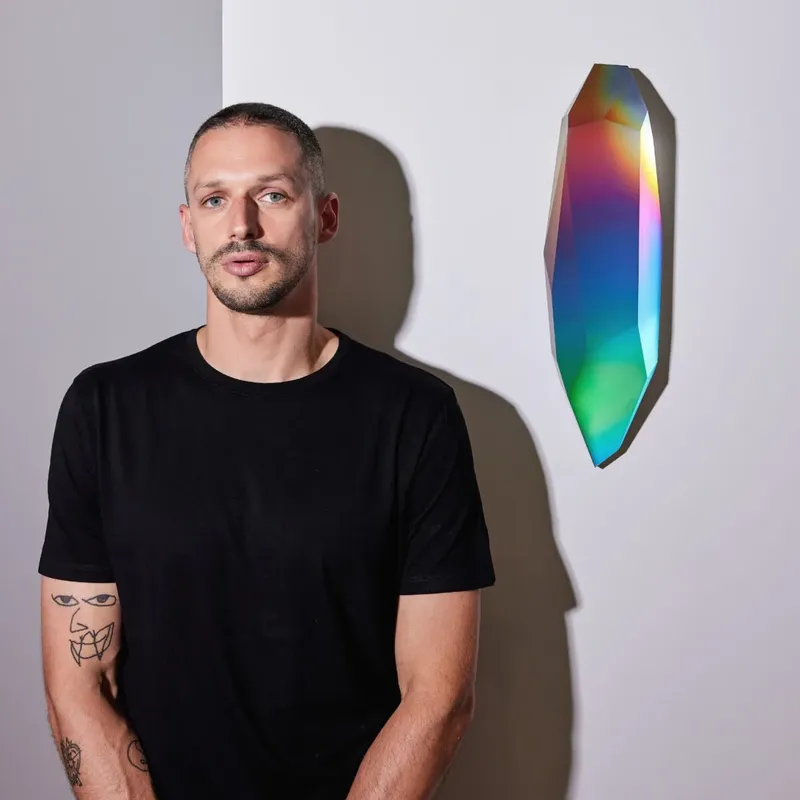
When I choose art for an interior, I am not looking for an object that merely fills an empty wall or dutifully repeats the shade of the sofa. I am looking for a work that changes the space, responds to daylight, and in which one keeps discovering something new even years later. That is precisely why I recommend Lukáš Novák. His glass is not decoration added at the end. It is light, an optical situation and emotion held within the material.
Craft that does not show off
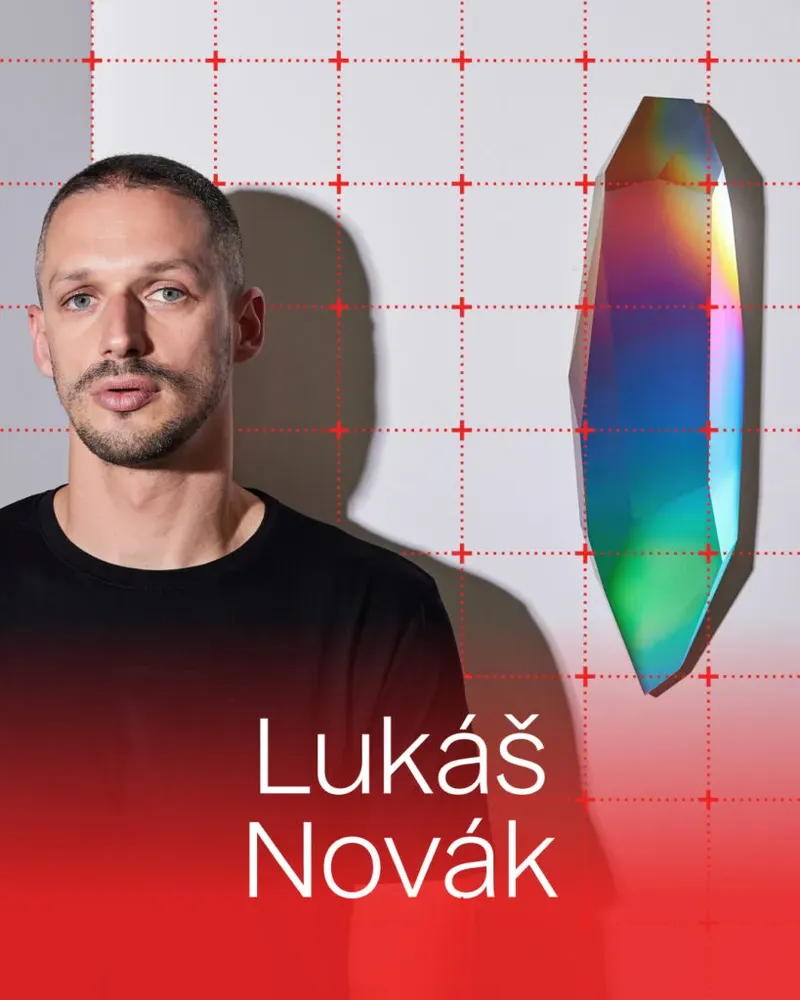
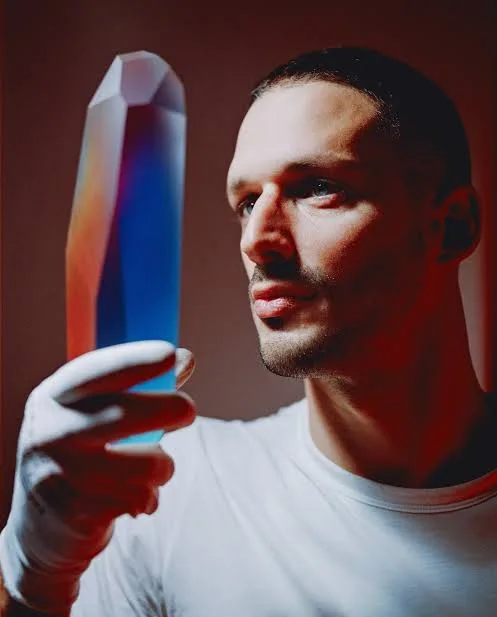
Lukáš Novák is one of the distinctive figures of contemporary Czech glass, and one of the artists pushing its traditional boundaries towards contemporary art. He draws on a deep knowledge of the material and the craft, which his work combines with experiment, precise form and a strong personal signature. For him, glass is not merely a material but a medium capable of working with light, optical illusion, emotion and the very perception of reality. His works are held in Czech and international collections. He appears regularly on the international scene. His works are held in Czech and international collections and appear regularly on the international scene. For the artist, craft is a tool of thought.
This is clearly seen in the Lost and Found cycle. In it, Novák reopened the roughly two-hundred-year-old technique of lithyalin glass and carried it into the present. Its characteristic patterning forms directly within the glass melt, through the interplay of colours, layers and the natural inhomogeneities of the material, which make every hand-blown object an original. It is not a nostalgic copy of a museum piece, but research into a forgotten process that has been given a new language.
Light as a material
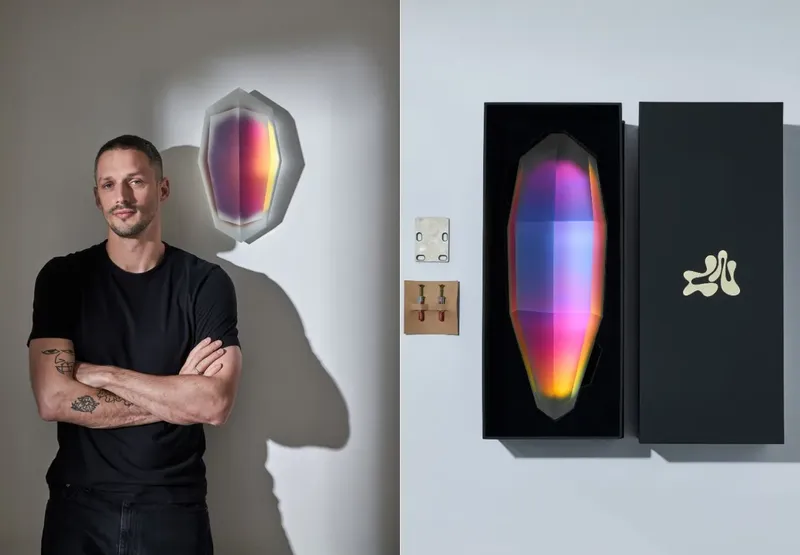
His most recognisable signature has become the Pretty Mirage series: wall-mounted crystals of hand-cut optical glass whose colours change with the viewing angle and the incoming light. The object is not finished when it leaves the studio. It is completed by a particular room, the time of day and the movement of a person. Novák captured it in a single sentence: “What I enjoy about glass is when it looks as though you want to eat it.” It is precisely this physical allure that makes his works more compelling in person than in photographs.
For a first serious acquisition, I would look precisely for a work that carries this optical signature. Pretty Mirage is instantly recognisable, technically demanding and at the same time quiet enough not to overpower the architecture. On a white wall it seems almost weightless; in a historic interior it creates a precise counterpoint to stucco, wood and brass.
An artist who does not repeat a single success
An important mark of an artist who stays interesting over the long term is the ability not to become trapped by one's own bestseller. In the objects UltraCore I and II, Novák translated the pressure to perform, biohacking and today's obsession with longevity into crystalline form; each was produced in an edition of just two pieces. The SILICA exhibition in 2026 then brought a further shift: he combined glass with concrete and mineral structures, and moved attention away from a perfectly polished surface towards layering, pressure, growth and the transformation of the material. For me, this is proof that he is not simply selling an impressive technique, but building a coherent body of work.
What a collector sees
Novák's work already has several important points of reference: it is held in the collections of the Kunstgewerbemuseum in Dresden and the Moravian Gallery in Brno, the artist has exhibited abroad and works with Kodl Contemporary. In 2025, Pretty Mirage received a special mention from the Premio Arterìa jury at The Venice Glass Week, and at his solo exhibition SILICA in Prague in 2026 he presented a new chapter of his work.
Equally important is the first legible secondary market. The object Pretty Mirage / MAT–0901-2023 sold at a Galerie KODL auction in 2023 for CZK 540,000, against a starting price of CZK 300,000. A single auction result is, of course, not an investment forecast, and the value of a living artist's work may fluctuate. It does, however, confirm that the work no longer lives only between the studio and the primary market, but has found demand on the open market too.
A collector's compass: Karin Svoboda
I would buy the strongest work the budget allows, not automatically the largest piece. For an edition, I would ask for the exact number of copies, the number of the specific object, the signature and a certificate of authenticity; for a unique piece, also its provenance, exhibition history and installation documentation. With optical glass, light is part of the work, so placement needs to be resolved before the colour of the sofa. The invoice, the original packaging and a condition report deserve to be kept as carefully as the object itself.
Why it belongs in Vinorum
In a building from 1905, contemporary glass has a particular strength. It does not try to pretend to be the past; it enters into a dialogue with it. Historic stucco, wood and brass carry the memory of the house; Novák's optical glass captures the light of today. This is exactly how I imagine the interiors of the Vinorum 1905 Residence: respect for what has already proven its value, and the courage to make room for what may define our own time.
That is why I do not set emotion and investment thinking against each other. Emotion is the first filter, the one that lets us truly live with a work. Collector's discipline then watches over quality, provenance, rarity and context. With Lukáš Novák, both can meet in a single object: a piece of glass that wakes up a little differently every morning.
Contact and purchasing a work
lukasnovak.org | info@lukasnovak.org | Instagram @lukasnovak04 | Kodl Contemporary, Pařížská 30, Prague 1
Printed edition
Related articles
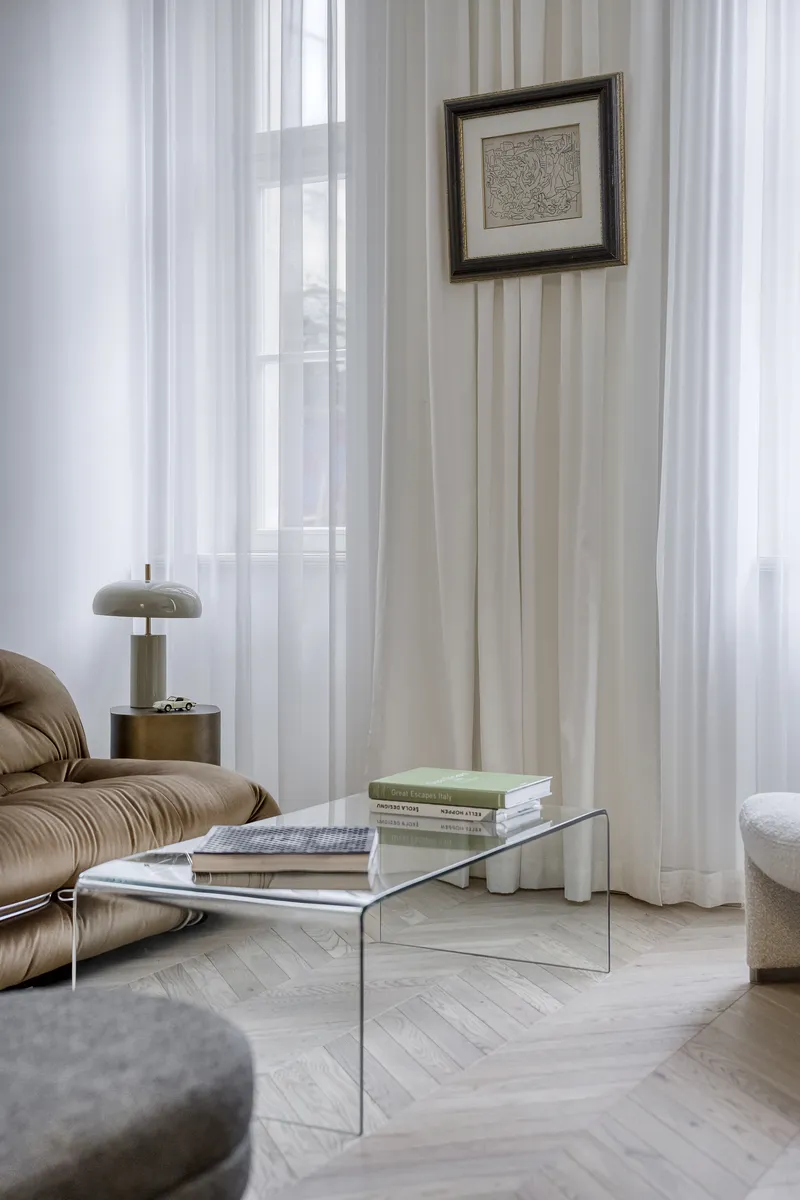 Art that gives a home confidenceSix artists whose works enter an interior not as decoration, but as personality.
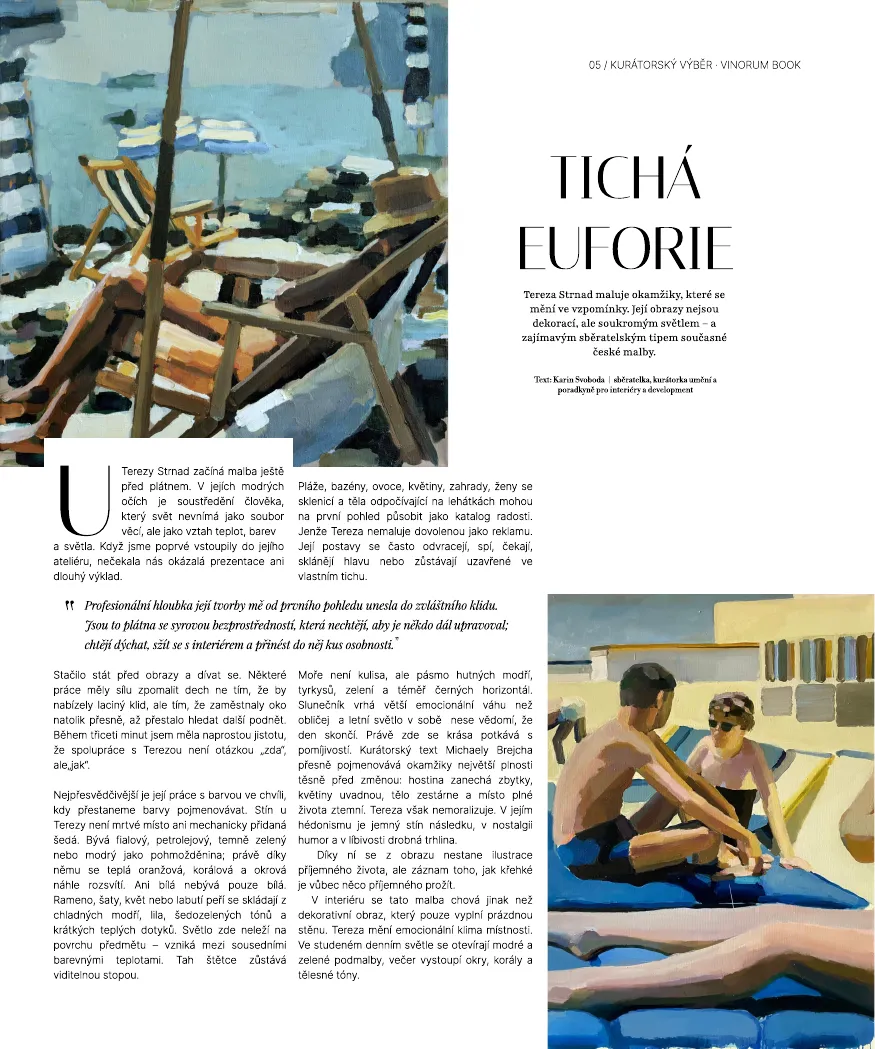 Quiet euphoria. Tereza StrnadWith Tereza Strnad, painting begins before the canvas. In her blue eyes lies the concentration of someone who perceives the world not as a collection of things, but as…
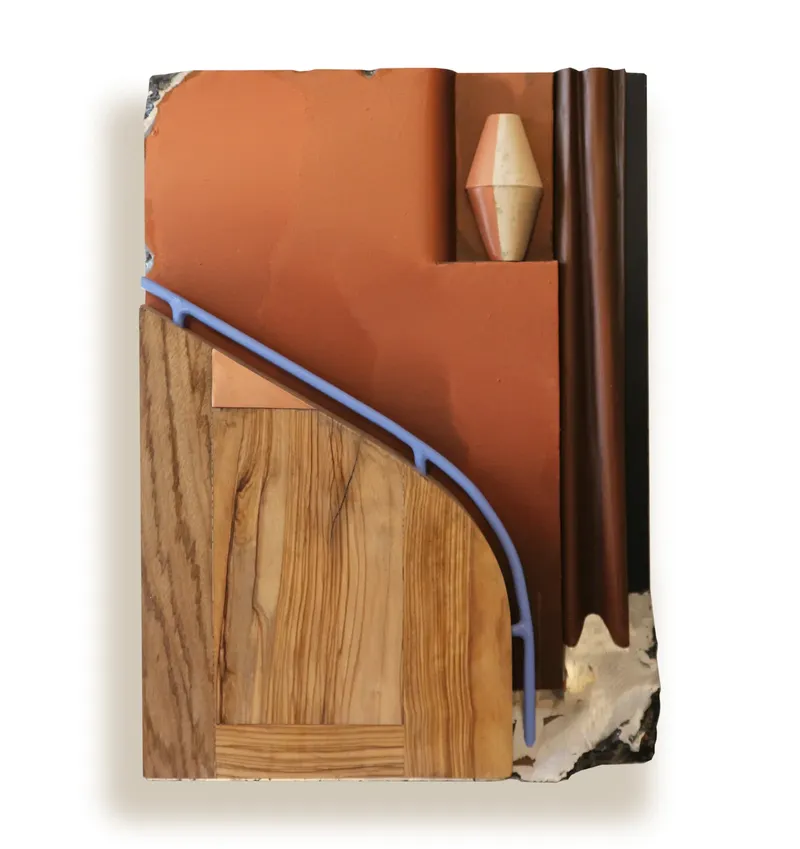 Pavel Dušek. A painting with its own gravityConcrete, steel, colour and shadow. Pavel Dušek’s reliefs do not imitate space. They create it.